
Electrical Panel Update Warning Signs: 5 Clues You Shouldn’t Ignore
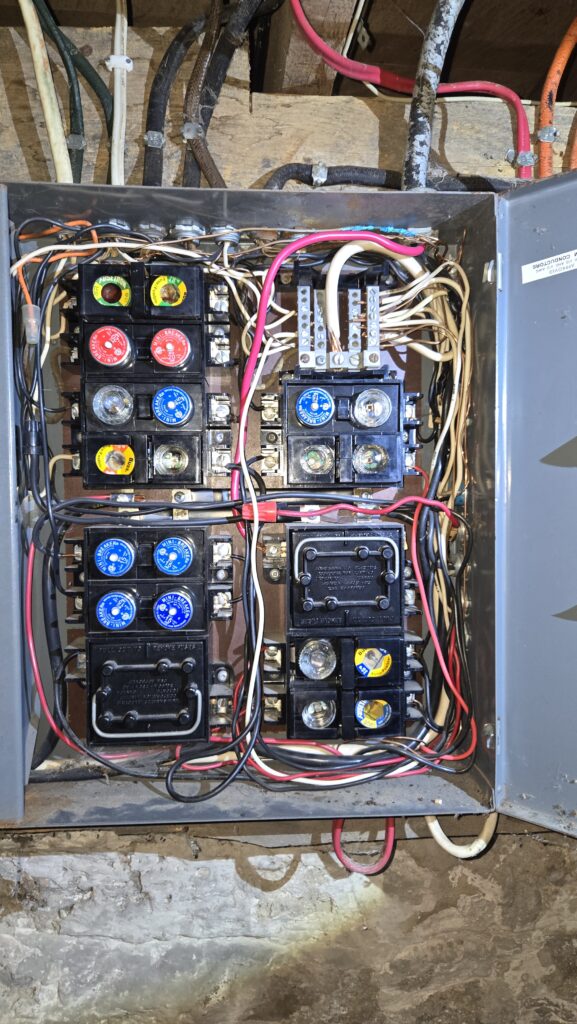
Your electrical panel is your home’s power hub. It takes electricity from the utility lines and sends it out through breakers to lights, outlets, and major appliances. When the panel is in good shape, it stays quiet in the background. When it’s not, it can turn into a safety risk.
Outdated panels weren’t built for today’s heavy loads, and problems often show up as “little” annoyances first. This post covers five clear signs your electrical panel needs an update now, plus the safest next steps.
Quick safety note: if you notice a burning smell, heat, smoke, or sparks, stop what you’re doing and call Blue Spark for a licensed electrician. If there’s an active hazard, call 911 emergency services.
Why an outdated electrical panel is a safety and insurance problem
Most older homes weren’t designed for modern power use. Think about what’s common now: central HVAC, big-screen TVs, home offices, air fryers, tankless water heaters, and sometimes an EV charger. That extra demand can push an older panel and its breakers past their comfort zone.
When a panel can’t keep up, you may get nuisance trips, warm breakers, or lights that act “glitchy.” Those aren’t just inconveniences. They can point to loose connections, overloaded circuits, or worn parts that create heat. Heat is the enemy of electrical gear because it can damage insulation and raise fire risk.
There’s also the practical side. A panel in poor condition can slow down a home sale, fail an inspection, or trigger repair requests. Some insurers and lenders may ask for electrical corrections when they see unsafe conditions, corrosion, or signs of overheating. It’s not about panic, it’s about risk and proof that the system is safe.
What “updating” a panel can mean (repair, breaker swap, or full panel upgrade)
“Update” can mean a few different things:
- Small repair: tightening or replacing a damaged wire, correcting a loose connection, or fixing a single problem circuit.
- Breaker replacement: swapping a failing breaker that won’t trip correctly, won’t reset, or shows heat damage.
- Full panel upgrade: replacing the panel box and related service equipment (and often improving grounding or bonding) to match today’s needs.
The right choice depends on capacity, condition, and local code rules. A licensed electrician from Blue Spark can check the panel, measure loads, and tell you what makes sense for your home.
Spot these 5 signs your electrical panel needs an update now
Sign 1: Breakers trip a lot or you rely on power strips and extension cords
If breakers trip often, your system is telling you something. Sometimes it’s simple overload, like running a microwave and toaster oven together. Space heaters, hair dryers, and window AC units can also push a circuit over its limit.
Frequent tripping can also point to a breaker that’s worn out and tripping too easily. Either way, it’s a warning that your panel and circuits might not match how you live today.
Power strips and extension cords feel like a quick fix, but they can hide the real problem. If you’re always hunting for an open outlet, you may need more circuits or more panel capacity.
Safest next step: avoid running multiple high-draw items at once, then schedule an evaluation. Ask if adding circuits, balancing loads, or a panel upgrade is the best fix.
Sign 2: Flickering or dimming lights, buzzing sounds, or breakers that won’t stay on
Lights that flicker when the fridge or AC kicks on can happen once in a while, but steady flicker is different. If one room dims, or lights pulse when you use a vacuum, that can signal a loaded circuit or a loose connection.
Buzzing or crackling from the electrical panel is another red flag. Panels should not “talk.” Noise can mean arcing, a loose wire, or a breaker that’s not making solid contact, and loose contact creates heat.
A breaker that won’t stay on is also a big clue. It may be doing its job because there’s a fault, or it may be failing.
Safest next step: if something feels unsafe (buzzing, strong flicker, burning odor), turn off the affected breaker if you can do so safely, then call a Blue Spark licensed electrician. Don’t open the panel or try to “force” a breaker to stay on.
Sign 3: The panel feels warm, you smell burning, or you see scorch marks
This is the sign that should stop you in your tracks. A panel cover that feels warm, a burning smell, melted plastic, discoloration, or scorch marks around a breaker all point to overheating.
Overheating can come from loose connections, corrosion, damaged insulation, or internal arcing. Arcing is like tiny electrical lightning, and it can burn and spread fast.
Even if the power still “works,” heat damage tends to get worse, not better. This is one of those cases where waiting can turn a repair into an emergency.
Immediate steps: keep people away from the panel, don’t touch bare metal, and don’t remove the cover. If it’s safe to do so, shut off the main breaker. Call a Blue Spark for a licensed electrician right away, and if you see smoke or flames, call emergency services.
Sign 4: Rust, water stains, or corrosion inside or around the electrical panel
Water and electricity don’t mix, and moisture around your panel is never “normal.” Water can enter from a roof leak, plumbing leak, a damp basement wall, or condensation in a poorly ventilated area. Outdoor panels can also suffer from failed seals.
Rust and corrosion on breakers or internal metal parts can cause poor contact. Poor contact increases resistance, and resistance creates heat. Corrosion can also make breakers stick or fail, which is the opposite of what you want during a fault.
Safest next step: fix the water source, then have a Blue Spark electrician inspect the panel. Moisture damage often means parts need replacement, and in many cases a full panel replacement is the safest option. Don’t try to clean corrosion yourself.
Sign 5: Not enough power for today (no open spaces, frequent upgrades, or major new loads)
A lot of older homes have 60-amp or 100-amp service. Many modern homes need 150-amp to 200-amp service, depending on what you run at the same time. If your panel is packed with no open breaker spaces, it may be at its limit.
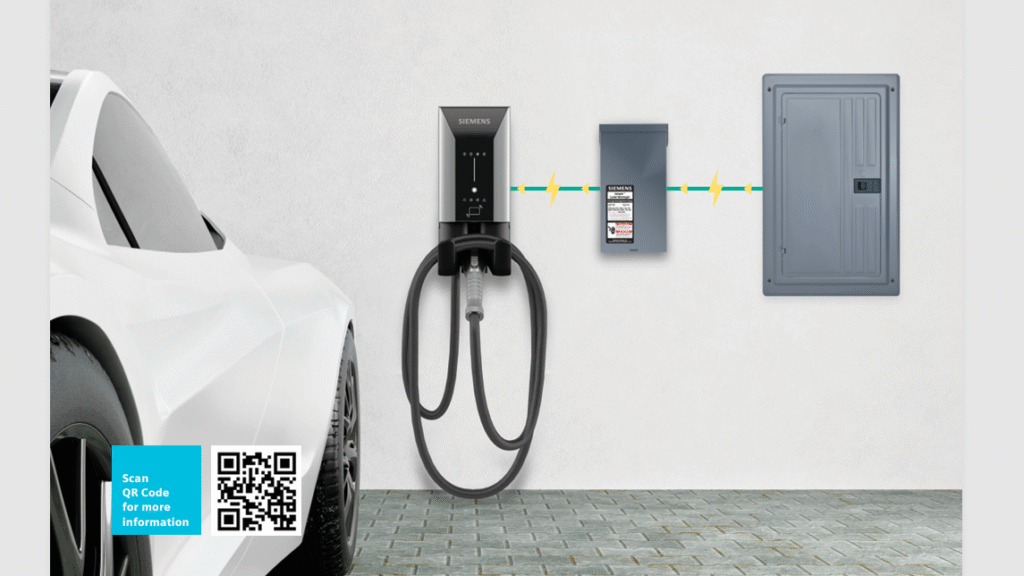
Common triggers for an upgrade include an EV charger, hot tub, new HVAC, finished basement, kitchen remodel, induction range, solar, or a backup generator. Each one adds demand, and demand adds heat and stress when capacity is tight.
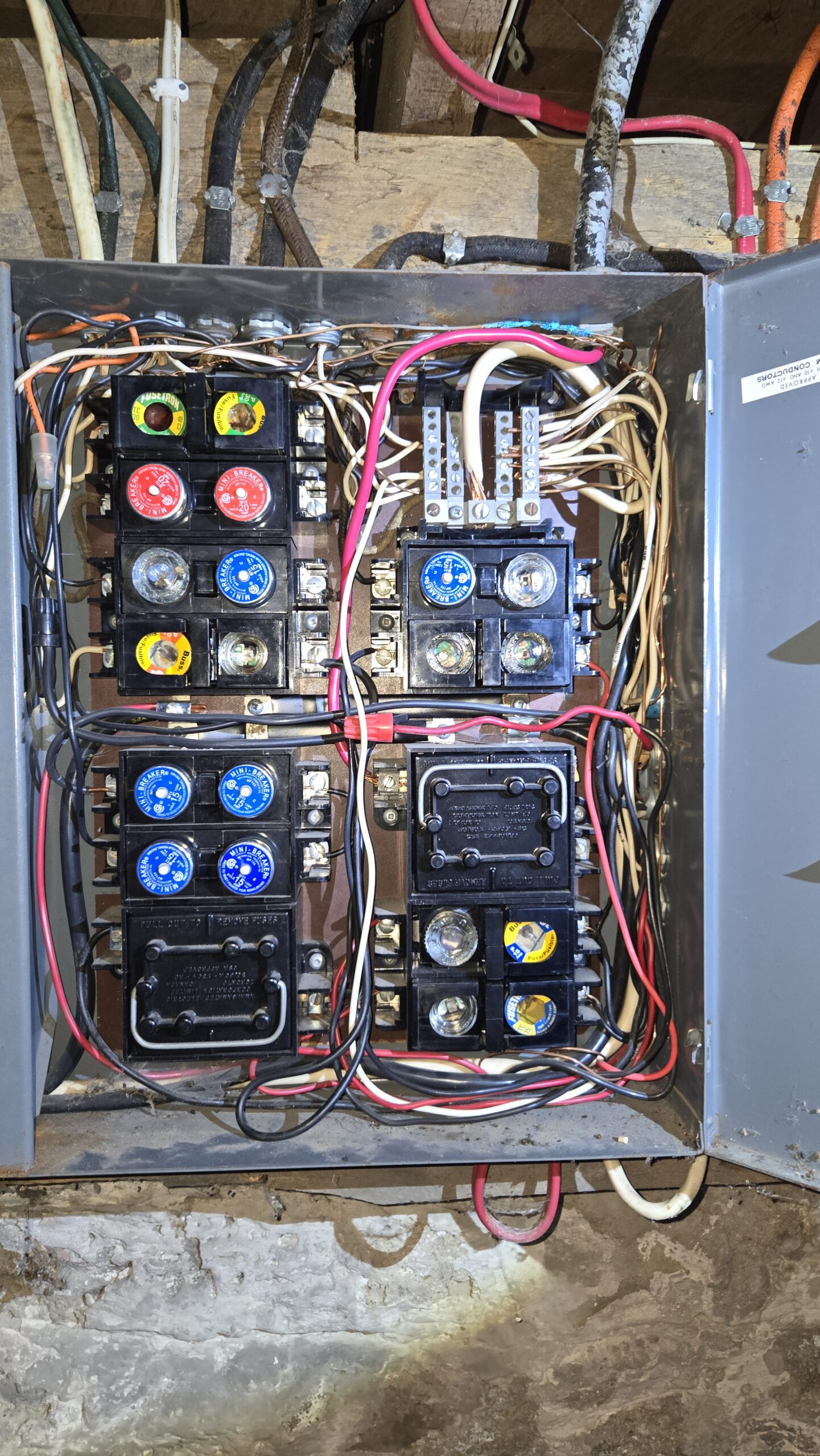
You might also notice a “crowded” panel with questionable add-ons, like doubled-up wires on one breaker or too many tandem breakers. Those can be signs someone tried to squeeze in more circuits than the panel was built to handle. Sometimes you will see connections made inside the panel, a sign of poor planning and prehaps overloading.
Safest next step: ask a Blue Spark electrician for a load calculation and a plan. Don’t add breakers or move wires around on your own this in most cases isn’t solving the underlying problem.
What to do next: safe steps, costs, and how to hire the right electrician
Start simple. Write down what you’re seeing (trips, flicker, buzzing, heat, rust) and when it happens. If you can do it safely, take photos from a few feet away with the panel door closed. Also clear the area so the electrician has easy access.
Book a licensed electrician from Blue Spark for a panel inspection or load review. Many panel replacements can be done in a day, but permits and an inspection are usually required. Plan for a scheduled power shutoff, and ask how long your home will be without power.
Costs vary based on the service size, any rewiring needed, grounding upgrades, the meter location, and local permit fees. Homes with moisture damage or damaged wiring can also take longer.
Hiring checklist: choose a Blue Spark electrician who is licensed and insured, pulls permits, explains the load calculation in plain language, provides a written estimate, and sets clear expectations for shutoff timing and inspection.
Conclusion
An electrical panel shouldn’t feel like a mystery box. If breakers keep tripping, lights flicker, the panel buzzes, the cover feels warm, you smell burning, you see corrosion, or you’ve simply outgrown your available power, those are real warning signs. They usually don’t fix themselves.
The main takeaway is simple: repeated warnings from your panel aren’t normal. Schedule a panel evaluation soon, especially before a remodel or adding big appliances. A quick inspection now can prevent a much bigger problem later.